
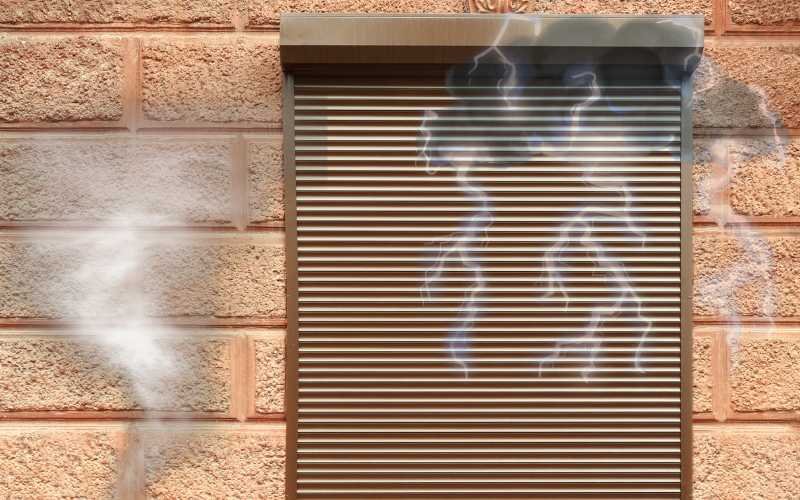
Roller shutters protect your home from storm damage.
But how well they hold up depends on the type you have, how they were installed, and whether they are built for Melbourne’s conditions.
This guide gives you the view, what happens to your shutters during a storm, and what you should do before and after one hits.
Melbourne’s weather can turn fast. Severe thunderstorms regularly bring wind gusts above 100 km/h.
Roller shutters act as a barrier, absorbing wind pressure, deflecting debris, and reducing rain entry.
But not all shutters are equal. Slat thickness, guide rail quality, and how the shutter is fixed to your wall all affect how it performs under pressure.
This guide is for Melbourne homeowners who want clear, practical answers. We cover the physics of what storm forces do to a shutter, how to check if yours are up to the job, what to do before a storm, and how to assess any damage after.
What Storm Forces Actually Do to Your Roller Shutters
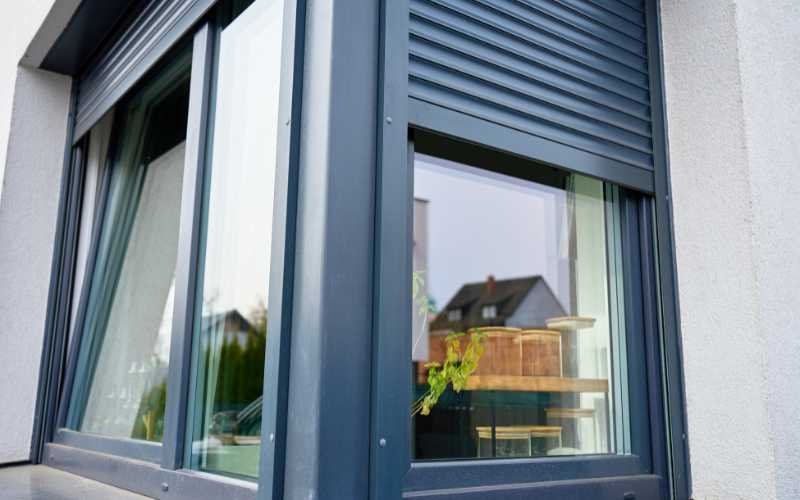
When a severe storm hits, your shutters face three forces at the same time.
1. Wind pressure and suction
Strong winds push on one side of the shutter and pull on the other that too at the same time.
Well-installed security shutter handle this without issue in most storms.
The risk comes when gusts go beyond the shutter’s rated wind load. At that point, slats can bow inward, tracks can flex, and the bottom rail can lift out of its guides.
2. Flying debris impact
In high winds, branches, garden furniture, and loose objects become projectiles.
Roller shutter slats are designed to take these hits.
Foam-filled aluminium slats handle impacts significantly better than thin single-wall profiles. A heavy object can dent a single-wall slat, but is unlikely to break through a properly rated one.
3. Where failure actually starts
Most homeowners assume the slats are the weak point. They are not.
The guide rails, bottom bar, and anchor fixings are where shutters most commonly fail.
If the rail is too shallow, or the anchor bolts are not fixed into the structural frame, the entire shutter can pull away from the wall, before the slats are even damaged.
This is why installation quality matters just as much as the product itself.
Standard Shutters vs Storm-Rated Shutters
Not all roller shutters are built to the same level.
In Australia, shutters are rated against AS 4055 – a standard that classifies wind load requirements by location and site exposure.
Homes in Melbourne that are on the coast, on a hill, or in an open corner need shutters that can handle more wind than homes that are in a sheltered area.
Slat profile and thickness
Standard shutters use single-wall aluminium slats, typically around 0.5 mm thick.
Storm-rated shutters use foam-filled double-wall slats that are usually 0.7 to 0.8 mm thick.
The foam core adds rigidity under wind load and improves impact resistance. If your home is in a storm-exposed area, foam-filled is the right choice.
What to ask before you buy
Ask your supplier for three factors:
- The wind load rating
- The AS 4055 classification
- The tested span – the maximum opening width the shutter is rated for at that wind load
A shutter rated for a 3-metre opening in N2 wind conditions will not perform the same way in a wider opening or a more exposed location.
Electric Shutters and Power Outages
Severe storms often cut power. If your shutters are motorised, that creates a real problem.
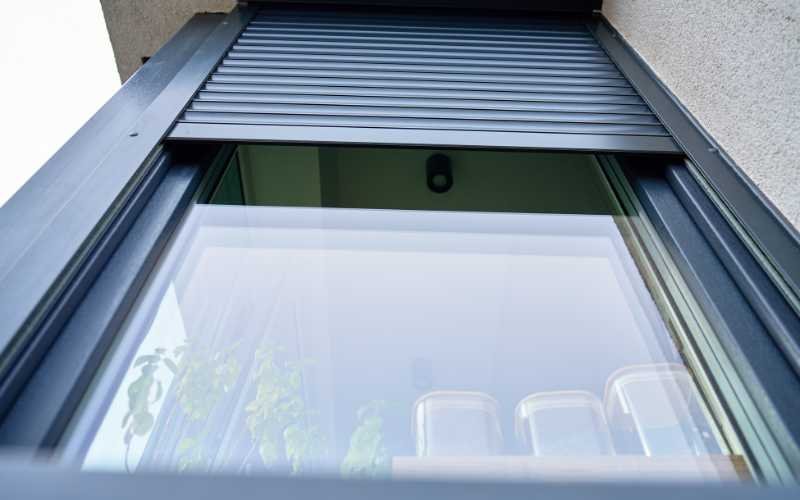
Manual override
There should be a manual override on every motorised roller shutter, like a hand crank or a pull cord.
Find yours now, before storm season. Make sure every adult in your household knows how to use it.
If you get a warning and the power is already out, you need to be able to close the shutters quickly, even if you don’t have electricity.
Battery backup
Some motors can be fitted with a battery backup unit that keeps the shutter operational during an outage.
If your Melbourne home often loses power during storms, especially on large or hard-to-reach openings, this is something to think about.
Ask your installer whether your current motor supports it.
Before the Storm – What to Do With Your Shutters
If a severe weather warning is issued for Melbourne, run through this checklist:
- Close all shutters fully. Confirm the bottom bar is seated in both guide rails.
- Engage any locking points or security locks on the bottom rail.
- Clear the guide rail tracks of leaves or debris that could block closure.
- If your shutters have motors, close them early, before the wind picks up, so the motor doesn’t have to work against pressure.
- If power goes out before you close them, use the manual override straight away.
Pre-season inspection
It is worth checking your shutters at the start of each storm season, not just when a warning is issued.
Look for:
- Cracked or bowing slats
- Rust or loose fixings on the guide rails
- Locks or latches that do not engage cleanly
Small issues caught early are far cheaper to fix than storm damage after the fact.
After the Storm — Checking Your Shutters for Damage
Once it is safe to go outside, check your shutters before you try to open them.
What to look for
- There should be guide rails on both sides. If there is any bending, pulling away from the wall, or cracked anchor points,
- Bottom rail: Look for warping or moving away from the tracks.
- Slats: Small dents in the surface are just cosmetic; slats that are bent or cracked and break the seal between panels need to be replaced.
- If the shutter feels stiff or uneven when you try to raise it, do not force it. Call a technician.
Documenting damage for insurance
Before you touch anything, photograph the damage.
Take close-up shots of:
- Bent or cracked guide rails
- Damaged slats
- Displaced bottom bars
- Any damage to the surrounding wall or frame
Note the date and the storm event. Your insurer will need this evidence, and having it ready makes the claim process much simpler.
Three Common Myths — Set Straight
Myth 1: All roller shutters offer the same storm protection
They do not.
Slat thickness, profile type, guide rail depth, and installation method all affect performance under wind load.
A budget shutter on a wide opening in an exposed location will not perform the same as a rated, foam-filled system fixed into the structural frame.
Myth 2: Closed shutters keep all water out
Roller shutters keep out a lot of rain that comes in with the wind, but they aren’t completely watertight.
Water can still enter through gaps at the base, between slats under extreme pressure, or through the guide rail channels.
They reduce water entry. They do not eliminate it.
Myth 3: If the slats look fine, the shutter is fine
The slats are often the last thing to show damage.
Guide rails, anchor fixings, and bottom rail locks can be compromised without any visible slat damage.
Check the whole system, not just the surface, after a bad storm.
Protect Your Home Before the Next Storm
Roller shutters are one of the most effective ways to protect a Melbourne home during a severe storm.
But they need to be the right product for your site, installed correctly, and maintained regularly.
OZ Roller Shutters supplies and installs storm-rated roller shutters across Melbourne. We make sure that every product is right for your site’s wind load needs, and our professional team installs it so you know it is done right, not just fitted.
If you are not sure whether your current shutters are up to the job, we offer a professional assessment before storm season.
If you are looking to install for the first time, we will advise on the right rating and profile for your location and opening size.
Contact OZ Roller Shutters today for a free estimate, or look through our selection of storm-rated shutters made for Victorian weather.