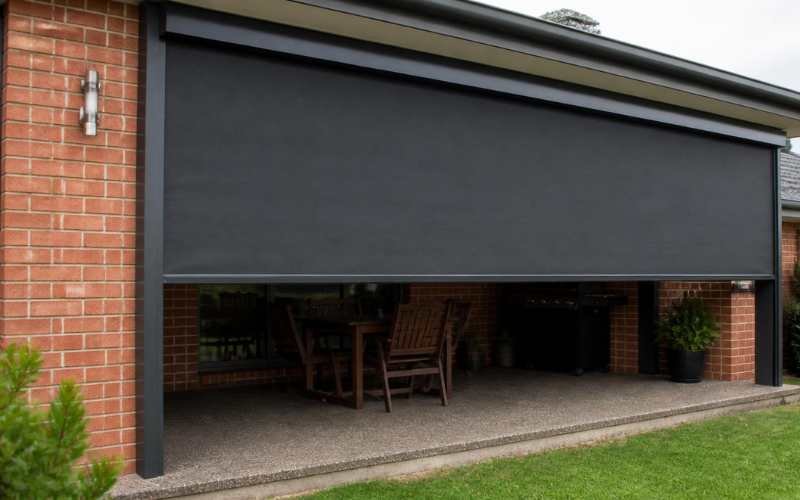


Old roller shutters are worth repairing if the frame, guide rails, and mechanism are still structurally sound. Replacement only makes sense when rust or damage has reached the springs, motor, or rails themselves.
Inheriting a property often means inheriting its roller shutters too, with no service history and no clear sense of how old they are or how well they’ve been maintained. That uncertainty makes it hard to know whether a stuck slat or a noisy motor is a simple fix or a sign the whole unit is past its working life. Age alone is not a reason to replace roller shutters because they are designed to survive for decades. However, if there is evident wear and an unknown history, it is worthwhile to take a close look before making a decision.
This guide explains exactly what to look for, from guide rails and slats to the type of mechanism, so you may confidently decide whether to replace or repair shutters you didn’t select and don’t yet know their history.
Key Takeaways
- Roller shutters are worth repairing if the frame, guide rails, and mechanism are structurally sound, even if slats are faded or cosmetically worn.
- Manual roller shutters are generally cheaper and simpler to repair than electric ones, since there’s no motor or wiring to assess.
- Surface rust and faded colour are usually cosmetic; rust on guide rails or springs often signals a structural repair or replacement is needed.
- If a roller shutter is difficult to move, stop forcing it, this can turn a minor repair into a full mechanism replacement.
- An unassessed old roller shutter with a compromised lock or bent slat can leave a property less secure than having no shutter at all.
Why Inherited Roller Shutters Need a Proper Assessment First
An inherited roller shutter comes with no paper trail. No invoice showing when it was installed, no record of past repairs, and no way to ask the previous owner how it’s been treated. That gap in knowledge is exactly why a quick visual glance isn’t enough. A roller shutter that looks rough on the outside can still have a sound mechanism underneath, and one that looks fine can be hiding a seized spring or a corroded guide rail. Starting with a proper, component-by-component check avoids two costly mistakes: replacing a shutter that only needed a minor repair or repairing one that was already beyond saving.
How Old Are Your Roller Shutters?
You can estimate a roller shutter’s age from its mechanism type and slat material, even without records. Older units are more likely to use a manual crank handle or a tape-and-spring system, while shutters installed more recently tend to be electric, often with a remote or wall switch. Aluminium slats have largely replaced older steel slat designs over the past few decades, so steel slats are usually a sign the shutter has been in place for twenty years or more. None of this tells you the shutter is due for replacement on its own, it simply sets the context for what to check next.

What Should You Check Before Deciding to Repair or Replace?
The condition of three components determines whether a roller shutter is worth repairing: the slats, the mechanism, and the guide rails and springs.
Are the Slats Cracked, Dented, or Rusted?
Faded colour or light surface rust on the slats is cosmetic and doesn’t affect how the roller shutter functions. Cracked slats, deep dents, or rust that’s eaten through the metal are different. These weaken the shutter’s structure and its ability to resist forced entry and usually mean the affected slats need replacing even if the rest of the unit is sound.
Is the Mechanism Manual or Electric and Does It Still Move Smoothly?
A manual roller shutter is generally cheaper and simpler to repair, since there’s no motor, wiring, or circuit board to assess. Most issues come down to the tape, spring tension, or crank mechanism itself. An electric roller shutter adds the motor as a variable: slow movement, stalling, or unusual noise from the motor often points to a bigger repair bill than a manual unit would need for the same symptom. If your shutter is hard to move, stop forcing it. Continuing to push a stuck roller shutter can bend the slats or strain the guide rails, turning a small fix into a much larger one.
Are the Guide Rails and Springs in Good Condition?
Guide rails keep the shutter moving in a straight line, and springs manage the tension that makes raising and lowering it possible. Rust or corrosion on either of these is more serious than surface rust on the slats. It affects the shutter’s core function rather than just its appearance and often means the repair needs to go beyond a simple clean and lubricate.

How Long Do Roller Shutters Actually Last?
A well-maintained roller shutter typically lasts 15 to 25 years, and sometimes longer for manual units with fewer moving parts to fail. This is why age alone shouldn’t decide whether to repair or replace an inherited shutter. A 15-year-old unit that’s been serviced regularly can be in better condition than a 5-year-old one that’s been neglected. What matters more than the number of years is the condition of the slats, mechanism, and rails you’ve just assessed.
Is It Cheaper to Repair or Replace Old Roller Shutters?
Repairing an inherited roller shutter is usually cheaper than full replacement, provided the damage is limited to one or two components rather than the whole unit. As a general guide, if the repair would involve replacing the motor, the guide rails, and multiple slats all at once, the combined cost can start to approach what a new roller shutter would cost – at that point, replacement often makes more practical sense.

Could Old, Unassessed Roller Shutters Be a Security Risk?
An old roller shutter left unassessed can leave a property less secure than having no shutter at all, because a bent slat or a compromised lock can look intact while offering little actual resistance to forced entry. This risk is not restricted to the roller shutter, if the property has a security door as well, the same logic applies. Unknown history hardware requires the same rigorous investigation as the shutter, as both are designed to be a property’s first line of protection. For an inherited home, checking the security door alongside the roller shutter gives a fuller picture of how secure the property actually is before you move in or rent it out.
When Should You Call a Professional for an Inspection?
If you’ve checked the slats, mechanism, and guide rails and you’re still unsure whether the roller shutter is worth repairing, that’s the point to bring in a professional. This is especially worth doing for older homes in established Melbourne suburbs, where roller shutters and security doors are often original to the property and haven’t been serviced in years. A trained technician can test spring tension, motor performance, and rail alignment properly. Assessments that aren’t safe or accurate to do yourself, particularly on electric units.
The Bottom Line on Inherited Roller Shutters
When the slats, mechanism, and guide rails of an inherited roller shutter are structurally intact, it is worth fixing. Age alone is not a reason to replace it, but corrosion on the rails or springs, a failing motor, or cracked slats typically are. The safest way to know for certain is a proper inspection rather than a guess based on how the shutter looks or sounds.
At OZ Roller Shutters, we assess inherited and older roller shutters across Melbourne every week, from original units in established weatherboard homes to shutters that came with a more recent renovation. We’ll check the slats, mechanism, and guide rails, give you a clear repair-or-replace recommendation, and quote honestly. We won’t push for a replacement if a repair will do the job properly. If the property also has a security door with an unknown service history, we can assess both at the same time, giving you a complete picture of the home’s security before you move in, rent it out, or sell.
Repair or Replace? Get a Straight Answer
Not sure whether your inherited roller shutters need a repair or a replacement? Get in touch with OZ Roller Shutters for a free, no-obligation assessment, we’ll tell you straight, and quote you fairly either way.